Cacao · Live Online Workshop · First Edition
Cacao Beyond
the Label
Returning to the Seed
What does a responsible relationship with cacao ask of us?
A live workshop on the cacao seed, responsible sourcing, the claims we inherit, and the questions they ask us to investigate.
Saturday, December 12, 2026
11:00 a.m.–2:30 p.m. ET & Colombia · Live on Zoom · Held in English
Early registration: USD 75 through November 22
Reserve your place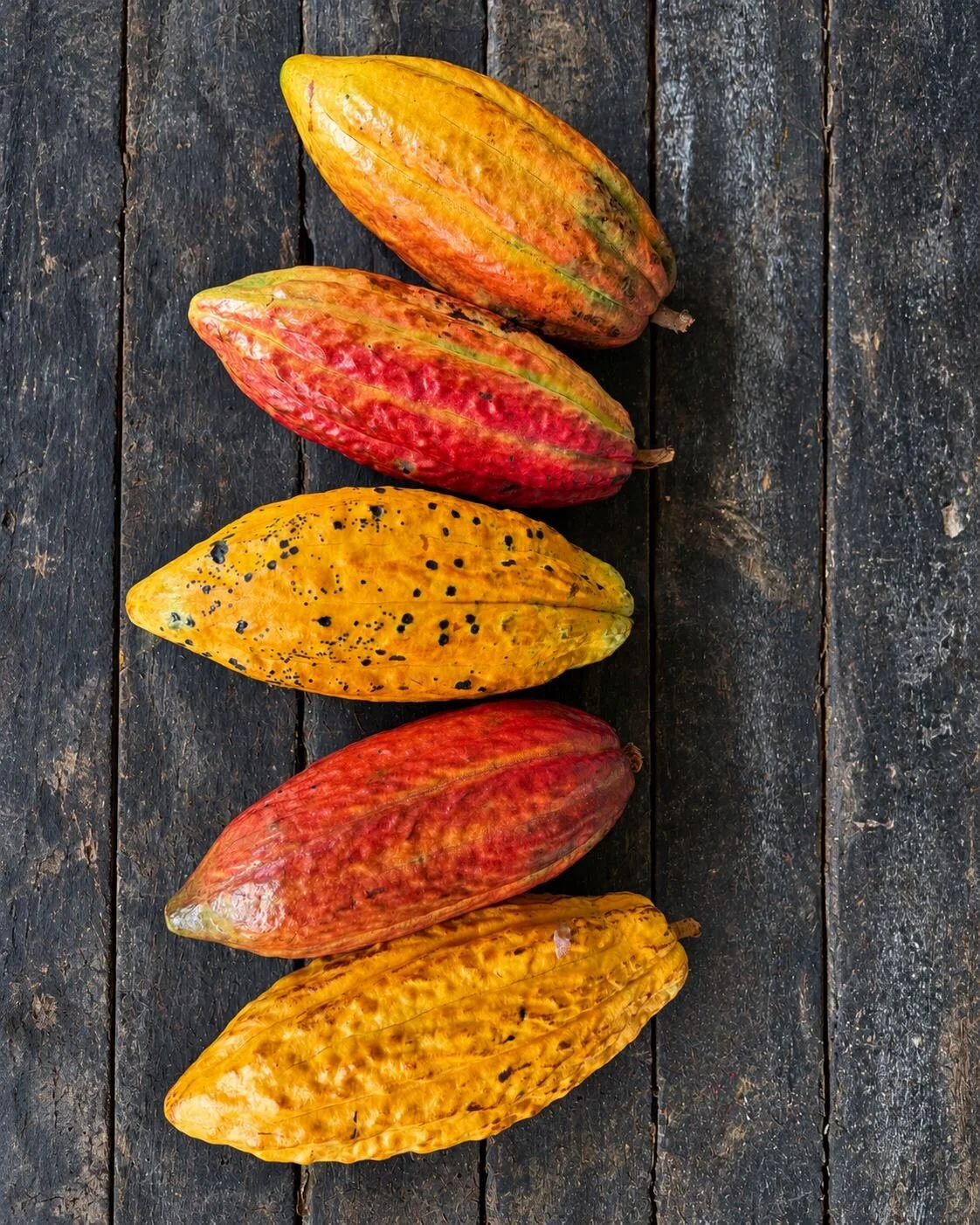
The words we inherit
Some words carry more authority than information.
Many of us who work with cacao inherit a vocabulary before we learn how to examine it.
These words can suggest qualities a label does not establish, turn a hypothesis into fact, or make a market category sound like an inherent property of cacao. Others have simply been repeated so often that they now sound like facts.
For years, I repeated some of these claims myself. This workshop grows from the questions that eventually made that impossible.
Those claims shape real decisions: what gets planted, what is preserved, what the market rewards, what those of us who share cacao learn to trust, and what ultimately reaches the cup.
Responsible sourcing
That is why sourcing matters.
To source cacao is to decide which seeds enter our hands, our practice, and the spaces we share with others.
Choosing with care asks us to look past the language on a package and investigate where the seed came from, how it was grown and handled, whose work made it possible, and what happened to it along the way.
What we have seen, we cannot unsee. What we know, we cannot unknow. Knowledge brings responsibility.
So we return to the beginning: the seed.
What we will explore
What becomes visible when we begin with the seed.
A map of the questions that matter, so you can continue investigating cacao with clearer eyes.
The life of the seed
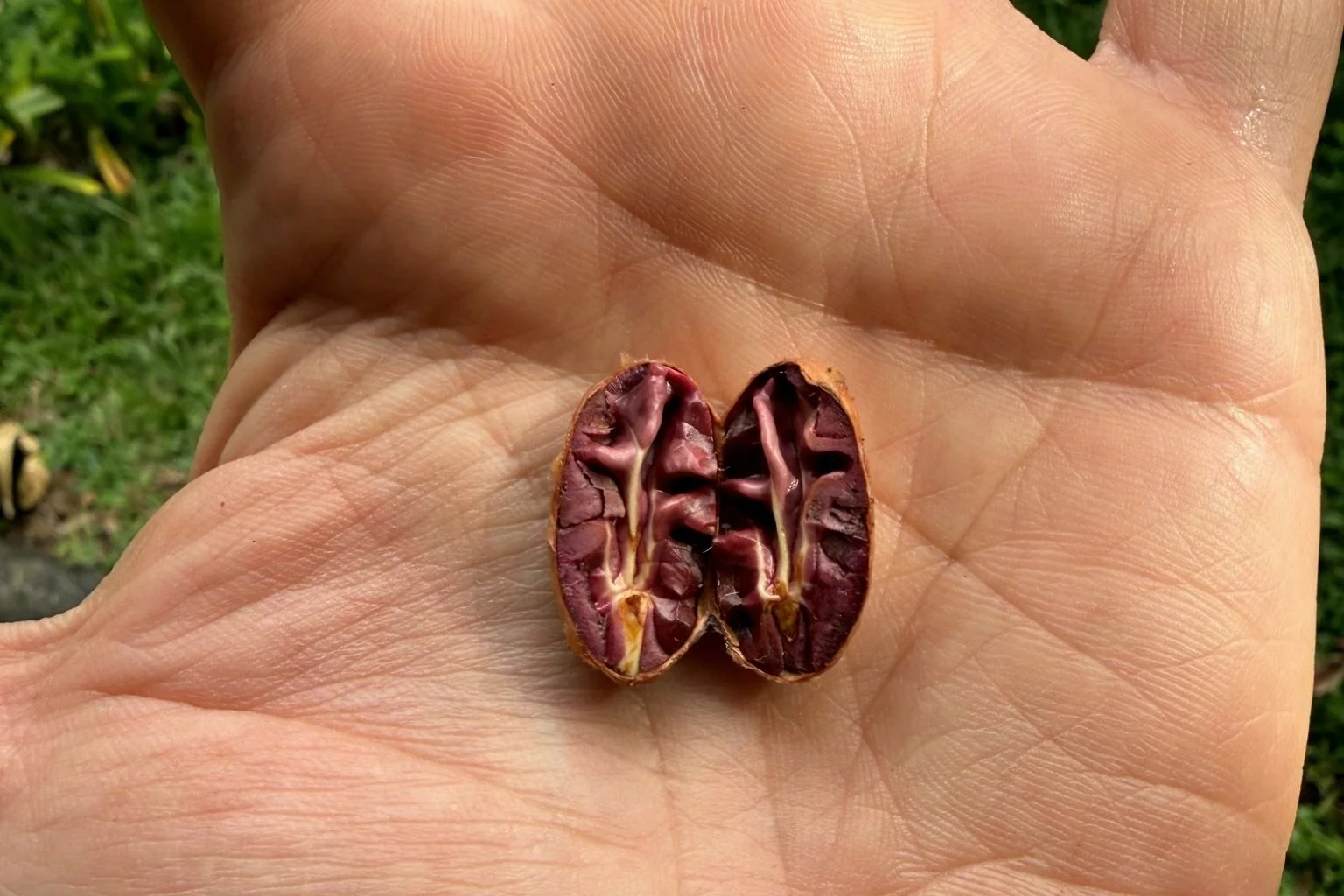
Cacao is a living plant within a living forest. We will begin with how it grows and reproduces, and with the relationships among soil, shade, insects, animals, and human communities that allow its seeds to continue.
We will look at the diversity of cacao, what contemporary genetic research can and cannot tell us, and what becomes obscured when cacao is reduced to three varieties or arranged into hierarchies of purity and value.
The history of which seeds survived is also a history of territory, colonization, and trade.
Reading the journey of cacao
The seed that reaches us carries the record of a journey. Planting, harvest, fermentation, drying, transport, and storage all shape what cacao becomes—and much of that journey remains invisible on a label.
Together, we will investigate:
- What does single origin actually tell us?
- What do Criollo, native, ancestral, and traditional describe—and what do they leave unsaid?
- What evidence supports claims about purity, potency, and theobromine?
- What does ethically sourced allow us to know about the people, land, and economic relationships behind a cacao?
- When cacao is called ceremonial, what kind of claim is being made?
These words may name botanical facts, commercial categories, cultural histories, political commitments, spiritual beliefs, or brand identities. Learning to distinguish among them is part of choosing and speaking about cacao responsibly.
The cosmology of the seed
A seed receives something from what came before, holds it through a passage, and carries it toward what may come next.
We will approach this dimension through the Maya K’iche’ lineage I have a responsibility to care for: a living tradition rooted in the long Mesoamerican relationship with cacao. Its cosmology continues through inherited cultural and spiritual practice carried in the present.
Within the limits of what I have permission to share, we will explore some of its teachings. My teacher Nan Faviana Cochoy Alva taught me that cacao carries a mission: to warm hearts that have grown cold, rekindle gratitude and reverence, and accompany our return to the Earth.
We will consider what that teaching asks of those who cultivate, source, prepare, and share cacao today.
How we will work
Inquiry grounded
in practice.
This workshop brings together grounded teaching, examples from my own sourcing experience, and a close examination of real cacao labels, websites, and product claims.
I will distinguish as clearly as possible between established evidence, open questions, market language, living tradition, and what I have learned through direct experience.
The purpose is not to replace one unquestioned story with another, but to develop greater discernment.
Bring the cacao you work with.
Bring the packaging, website, or claims associated with a cacao you currently use—or one you are considering. We will reserve time to investigate participants’ questions together, where inherited narratives meet the realities of practice.
What you will leave with
Clearer eyes.
Better questions.
-
01
A grounded understanding of the cacao plant, forest, fruit, and seed.
-
02
Greater clarity about how cultivation and post-harvest processes shape cacao.
-
03
Practical questions to ask producers, suppliers, and cacao companies.
-
04
More discernment around claims about origin, variety, purity, theobromine, ethics, and ceremonial quality.
-
05
More precise and transparent language for speaking about cacao in your own spaces.
-
06
An introduction to the cosmology of the seed and the responsibilities held within our relationship with it.
-
07
Written workshop notes and a set of sourcing questions to continue the inquiry.
Who it is for
For those who work
with cacao—or are
preparing to.
You may already source, prepare, or share cacao in circles, ceremonies, retreats, gatherings, or your personal practice. You may be preparing to begin and want to build that relationship on clearer knowledge and more informed choices.
You do not need extensive professional experience. You do need a willingness to examine what you have learned, question what you repeat, and look more closely at the cacao that enters your hands.
This is an educational workshop,
not a facilitator certification.
About Andrés
Experience, responsibility,
and a stake in the questions.
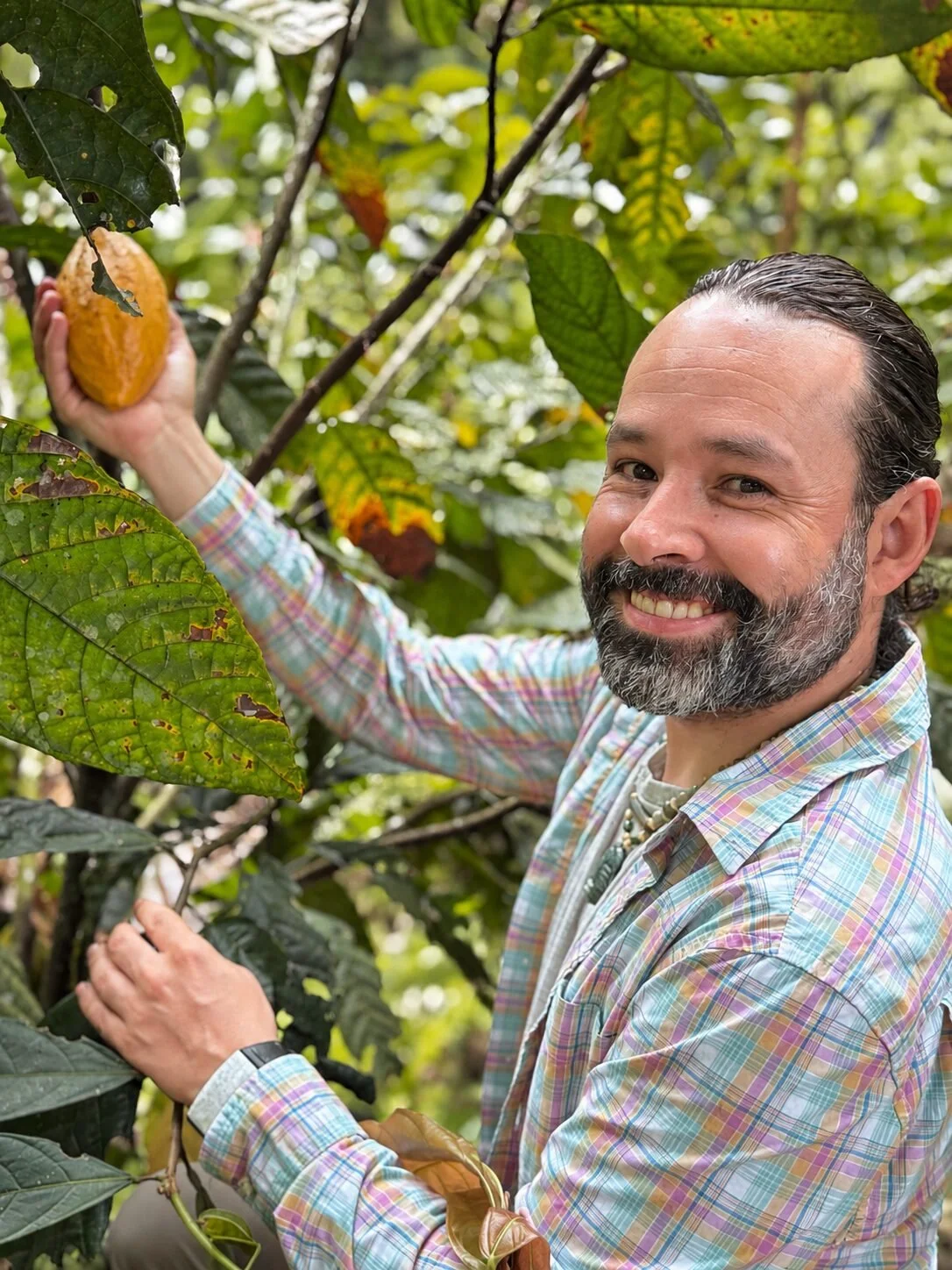
I have worked with cacao for more than a decade: planting it, making it, drinking it, serving it in circles and ceremonies, visiting the territories where it grows, and sampling cacao from every origin I can enter into relationship with.
At the invitation of its founder, Keith Wilson, I served for four years as General Manager of Keith’s Cacao at Lake Atitlán, Guatemala. My work included sourcing, quality control, production oversight, team coordination, and holding ceremonies.
I was initiated as an Ajq’ij in the Maya K’iche’ tradition under the guidance of Nan Faviana Cochoy Alva and Tat Pedro Yac Noj.
Today I make Yaguarundí, my own cacao from Colombian seeds. This places me inside the questions examined in this workshop. Yaguarundí must withstand the same scrutiny as any other cacao.
I will share what I have learned through experience, research, relationships with growers and territories, personal practice, and the teachings entrusted to me.
Nothing here is offered as the final word. It is offered to make the inquiry more honest, informed, and alive.Read Andrés’s full story
A place to begin · Free online talk
Beyond “Ceremonial”
How much of the story behind your cacao can the person selling it actually prove? Join me for an introduction to the questions that changed how I source, work with, and speak about cacao.
Saturday, November 14 · 11 a.m. ET / Colombia
Live on Zoom · In English · One hour including Q&A
Register to receive the recording.
From the writings
Cacao & Ceremony
Before It Was
Ceremonial,
It Was Real
An essay about cacao, ceremony, appropriation, and what remains when we stop asking a product to confirm our spiritual identity.
Read the essayDetails & registration
Return to
the seed.
8:00–11:30 a.m.
11:00 a.m.–2:30 p.m.
4:00–7:30 p.m.
5:00–8:30 p.m.
Live on Zoom · Held in English
Three and a half hours: two 90-minute parts with a 30-minute break
Includes dedicated time for questions and conversation
Limited to 30 participants
You are invited to prepare a cup of the cacao you currently work with—or one you would like to understand more deeply.